Breaking News


Enter your email address below and subscribe to our newsletter
Virtual Assistant Blog
A complete beginner’s guide to virtual assistant work covering skills, tools, income potential, and step-by-step instructions to start earning online.

Virtual assistant (VA) work has quickly become one of the most accessible and flexible career paths in the digital economy. Whether you’re a student, stay-at-home parent, freelancer, or someone looking to escape the traditional 9–5 grind, becoming a virtual assistant offers a low-barrier entry into remote work with high income potential.
In this comprehensive beginner’s guide, you’ll learn everything you need to know—from what a virtual assistant actually does to how to find your first client and scale your income.
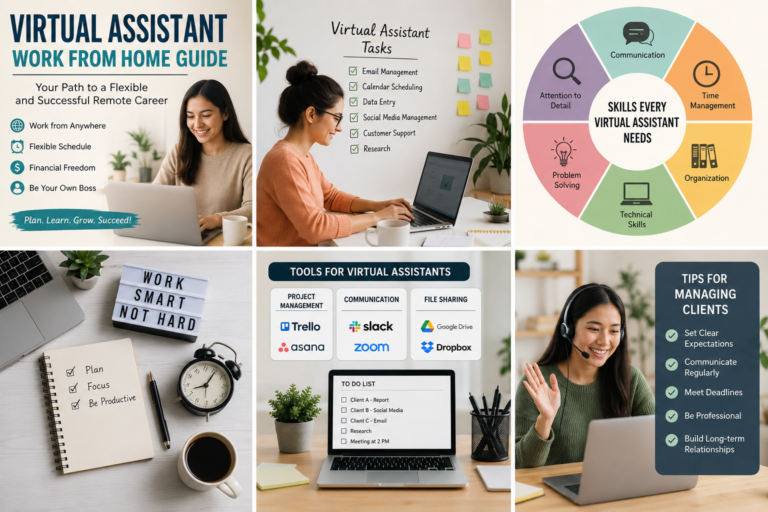
A virtual assistant is a remote professional who provides administrative, creative, or technical support to businesses, entrepreneurs, or individuals.
Unlike traditional assistants, VAs work online, often from home, and communicate with clients through tools like Zoom, Slack, and Trello.
The rise of remote work and online businesses has created a massive demand for virtual assistants.
1. Low Startup Cost
You don’t need a degree or expensive equipment—just a laptop and internet connection.
2. Flexible Schedule
Work part-time or full-time, whenever you want.
3. Work From Anywhere
Whether you’re in Bangladesh or abroad, location doesn’t matter.
4. High Demand
Platforms like Upwork and Fiverr have thousands of VA job listings.
5. Scalable Income
You can increase your rates or build an agency over time.
Not all VAs do the same work. Choosing a niche can help you stand out and earn more.
Tools often used:
Common platforms:
You don’t need to know everything, but certain skills will make you more competitive.
Communication Skills
Clear written and verbal communication is critical.
Time Management
Handling multiple clients requires organization.
Basic Computer Skills
Familiarity with tools like:
Problem-Solving Ability
Clients expect you to think independently.
Instead of being a general VA, pick a specific area like:
Start with:
Free resources:
Even without experience, you can:
Beginner rates:
Best platforms:
Landing your first client is the hardest step—but also the most important.
1. Write a Strong Proposal
2. Start Small
3. Optimize Your Profile
Include:
Income varies based on skill level, niche, and experience.
Top VAs working with international clients can earn full-time incomes comparable to traditional jobs.
Trying to do everything can make you less competitive.
Starting low is okay—but don’t stay there.
Delayed responses can lose clients.
Always clarify:
Once you gain experience, you can grow your income significantly.
1. Raise Your Rates
As your skills improve, charge more.
2. Specialize Further
Example: from social media VA → Instagram marketing expert
3. Build a Personal Brand
Use platforms like LinkedIn to attract clients.
4. Start an Agency
Hire other VAs and manage projects.
Virtual assistant work is ideal if you:
However, it requires discipline, consistency, and continuous learning.
With the continued growth of online businesses, the demand for VAs is expected to increase.
Trends include:
Virtual assistant work is one of the easiest and most scalable ways to enter the digital workforce. You don’t need advanced qualifications—just the willingness to learn, adapt, and take action.
Start small, stay consistent, and focus on building real value for clients. Over time, this simple path can turn into a full-time income or even a thriving online business.
You don’t need formal qualifications. Basic computer skills, communication ability, and willingness to learn are enough to start.
Yes, beginners can start earning within weeks if they apply consistently and build basic skills.
It can take anywhere from a few days to a few weeks depending on your effort, skills, and proposal quality.
Yes, but you should use trusted platforms and avoid clients who ask for unpaid work or suspicious payments.
Platforms like Upwork and Fiverr are great starting points due to their large number of job listings.