Breaking News


Enter your email address below and subscribe to our newsletter
Virtual Assistant Blog
A complete guide exploring whether becoming a virtual assistant is worth it, including income potential, pros and cons, and real-world insights.

At some point, almost everyone looks at their current job and thinks:
“There has to be a better way to make money than this.”
That’s usually when roles like virtual assistants start appearing in search results, promising flexible schedules, remote work, and the kind of freedom that sounds suspiciously like a productivity influencer’s dream.
So naturally, the question comes up:
Is becoming a virtual assistant actually worth it—or is it just another overhyped online career?
The answer is not as simple as yes or no.
It depends on your expectations, your skills, and how you approach it.
This guide breaks everything down so you can make a decision based on reality instead of marketing.
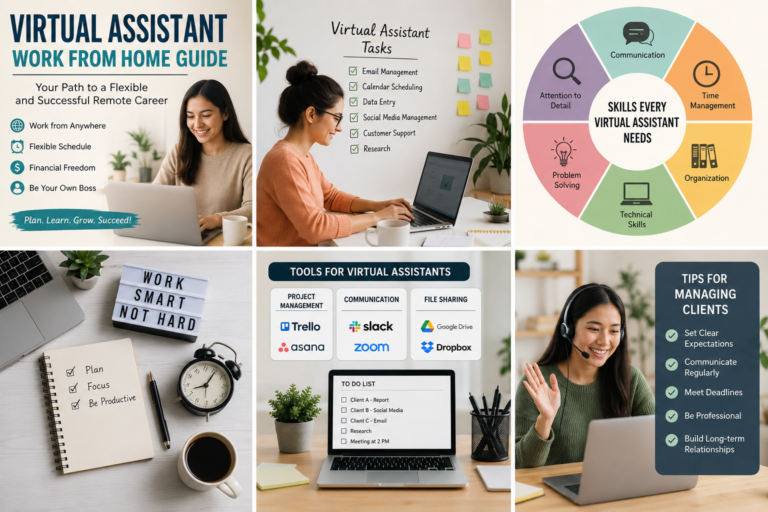
A virtual assistant (VA) is someone who provides remote support services to businesses, entrepreneurs, or individuals.
These services can include:
In simple terms, a VA helps people stay organized and productive—without being physically present.
You can work from home—or anywhere with a decent internet connection.
Many VA roles don’t require advanced degrees.
More businesses are outsourcing tasks to save time and money.
You can work independently instead of being tied to one employer.
Income varies widely depending on experience, skills, and location.
The range is wide because the role itself is flexible.
Handles basic administrative tasks.
Manages content, posting, and engagement.
Supports high-level professionals.
Handles product listings, orders, and customer support.
Assists with writing, editing, and publishing.
Work on your own time (within client expectations).
No commute. No office politics.
You only need a laptop and internet.
Work with multiple clients.
Freelance work can be inconsistent.
Dealing with multiple clients isn’t always easy.
Many people are entering the VA space.
Higher-paying roles require specialized skills.
Clear and professional interaction with clients.
Managing multiple tasks efficiently.
Meeting deadlines consistently.
Basic tools like:
Yes—but with realistic expectations.
You won’t start at high income levels immediately.
Most people begin with lower-paying tasks and build experience over time.
Pick services you can offer.
Learn tools and workflows.
Use platforms like freelancing sites.
Start small and build experience.
Increase rates as you gain experience.
Leads to burnout.
Reduces quality.
Limits income growth.
Is becoming a virtual assistant worth it?
Becoming a virtual assistant can be a great career—but it’s not effortless.
It requires skill, consistency, and patience.
If you approach it seriously, it can provide freedom and income.
If you expect quick results, you’ll likely be disappointed.
Yes, it’s a real and growing industry.
Typically $3–$10/hour.
Not always, but it helps.
Yes, many start part-time.
Yes, with skill development.